
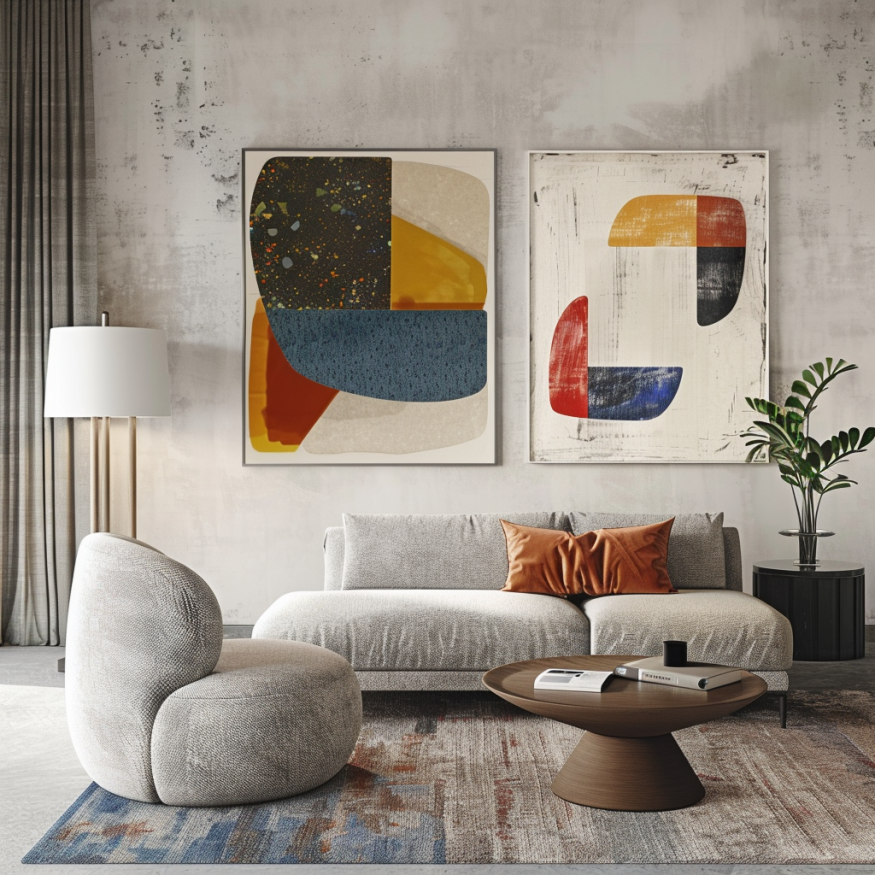
Choosing art often feels more complicated than it needs to be. With so many styles, colors, and formats available, it’s easy to feel unsure about what will truly work in a space.
Art is not meant to exist separately from the interior. When chosen thoughtfully, it becomes part of the overall design — interacting with furniture, light, materials, and architecture. Rather than standing alone, art supports and completes the atmosphere of a room.
The right artwork doesn’t compete with an interior style — it strengthens it. When art aligns with the character of a space, it brings clarity, balance, and a sense of cohesion that makes the entire room feel more intentional.
Understanding Your Interior Style
Interior styles are often described with terms like minimal, modern, contemporary, or eclectic. While these labels can be helpful, most real homes don’t fit neatly into one category. Instead, they blend influences, textures, and personal preferences.
Rather than strictly classifying your space, it’s more important to understand how it feels. Is it calm and restrained, warm and expressive, or bold and dynamic? Sensing the atmosphere of a room helps guide better art choices than following rigid style rules.
Art works best when it feels like a natural extension of the home. When artwork reflects the mood, rhythm, and visual language of a space, it becomes part of the environment — reinforcing the overall atmosphere rather than interrupting it.
Color Harmony Between Art and Interior
Color harmony plays a key role in how art integrates into an interior. When artwork supports the existing color palette, it helps create a cohesive and balanced space. This approach works especially well in calm, minimal interiors where subtle variations reinforce a sense of order.
In some cases, art is meant to create contrast. A contrasting artwork can act as a focal point, adding energy and personality to a room. The key is intention — contrast should feel deliberate, not accidental, and should be balanced by keeping the rest of the space visually calm.
One of the most common mistakes is using too many colors without a clear relationship between them. When there’s no balance, the space can feel restless or disconnected. Thoughtful use of color — whether harmonious or contrasting — allows art to enhance the interior rather than overwhelm it.
Form, Lines, and Visual Language
Form and line play a subtle but powerful role in how art relates to an interior. Geometric shapes and sharp lines tend to feel structured and controlled, while soft forms and curves introduce warmth and fluidity. Both approaches can work beautifully, depending on the character of the space.
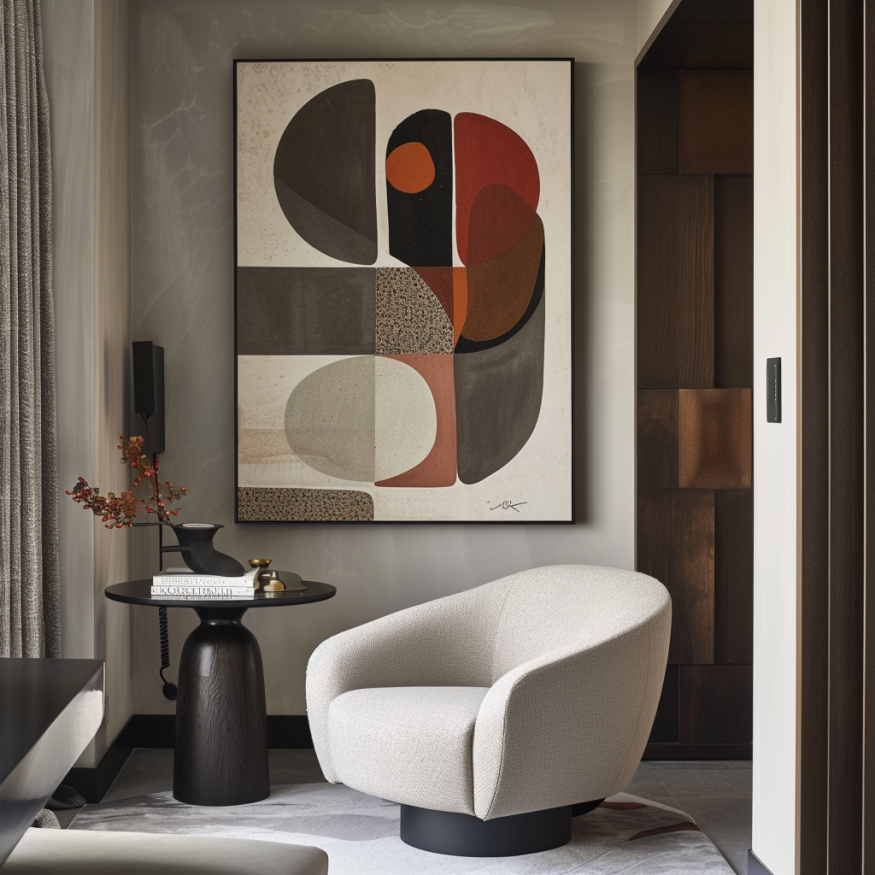
When the lines within an artwork echo the shapes found in furniture and architecture, the room feels more cohesive. Clean lines in art often complement modern furniture and architectural details, while flowing forms pair naturally with softer materials and organic shapes.
In interior spaces, visual language is often more important than subject matter. Rather than focusing on what the artwork depicts, it’s worth paying attention to how it communicates visually. When form and line align with the surrounding environment, art integrates effortlessly into the space.
Matching Art Styles to Interior Styles
Different art styles naturally align with different interior atmospheres. Understanding these connections helps create spaces that feel balanced and intentional.
Clean Minimal
Clean minimal art works best in minimalist and modern interiors. Its reduced forms, careful use of negative space, and restrained color palettes support clarity and openness, allowing the space to feel calm and uncluttered.
Organic Flow
Organic flow art is ideal for warm, natural, and calm spaces. With soft curves and fluid compositions, it brings movement and emotional balance, making interiors feel relaxed and welcoming.
Modern Abstract
Modern abstract art pairs well with contemporary and expressive interiors. Through bold shapes and dynamic compositions, it adds energy and character, helping spaces feel visually engaging without becoming overwhelming.
Scale and Placement Considerations
Scale is one of the most important factors when choosing art for an interior. Artwork should feel proportionate to the wall it occupies. Pieces that are too small can feel lost, while oversized works may dominate the space if not balanced properly.
When placing art above furniture, alignment and size matter. The artwork should relate visually to the piece below it, ideally being centered and slightly narrower. This creates cohesion and prevents the composition from feeling top-heavy or disconnected.
In many cases, one well-chosen artwork works better than a series. A single piece creates focus and clarity, especially in spaces where simplicity is key. Series or gallery-style arrangements can work beautifully too, but only when they are thoughtfully curated and given enough breathing room.
Let Art Be a Statement
In some interiors, art is meant to take the lead. When the surrounding space is calm and restrained, artwork can become the main focal point, bringing personality and expression into the room.
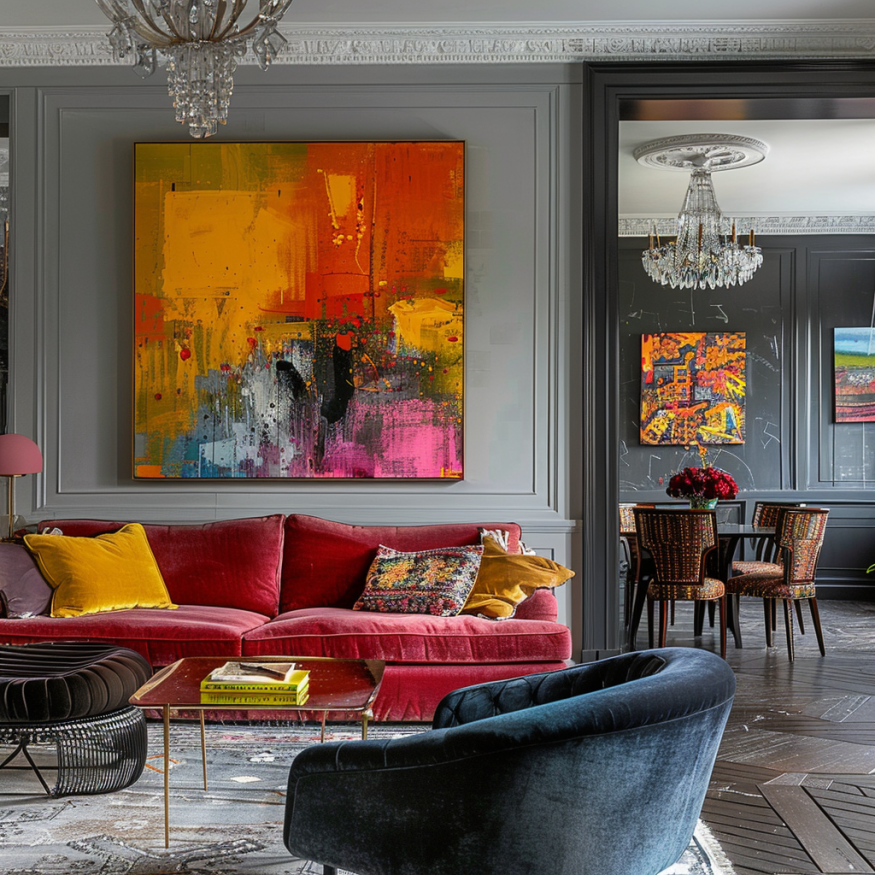
Being expressive doesn’t mean overwhelming the space. Bold art works best when it’s given room to breathe. Keeping furniture, colors, and decor simple allows the artwork to stand out while maintaining balance.
The key is harmony. Art and interior should support each other rather than compete. When expression is balanced with intention, artwork becomes a statement that elevates the space without disrupting its overall flow.
Curated Art by Style at Silta
At Silta, we curate art with interior styles in mind. Each artwork is selected for how it interacts with space, color, and form, ensuring it naturally complements different interior environments.
Our curated collections simplify the process of choosing art. By grouping pieces that share a common visual language and mood, we help you find artwork that fits your interior style without overthinking the details.
Whether your space is minimal, warm, or expressive, our collections are designed to guide you toward art that feels intentional and balanced.
Explore art by style
Conclusion
Art often becomes the final element that brings an interior together. It adds depth, character, and meaning, completing a space in a way that furniture and decor alone cannot.
Choosing art is both an intuitive and thoughtful process. While design principles help guide decisions, the most successful interiors are shaped by pieces that feel right on a personal level — art that resonates emotionally as well as visually.
When selected with intention, art transforms a room from well-designed to truly lived in, turning interiors into spaces that feel balanced, expressive, and complete.
How do I choose art that matches my interior style?
Start by understanding the mood and visual language of your space. Consider color, form, and overall atmosphere rather than focusing only on specific style labels.
Should art always match the colors of the interior?
Not always. Art can either support the existing color palette or create contrast. The key is balance — contrast should feel intentional and not overwhelm the space.
Is it better to choose one large artwork or several smaller pieces?
In many interiors, one well-scaled artwork creates clarity and focus. Multiple pieces can work too, but they require careful curation and spacing to avoid visual clutter.
Can bold art work in minimal interiors?
Yes. Bold art often works beautifully in minimal spaces, especially when the surrounding elements are calm and restrained. This allows the artwork to stand out as a statement.
How important is placement when choosing art?
Placement is essential. Even the right artwork can lose impact if it’s positioned too high, too low, or without relation to furniture and architecture.