
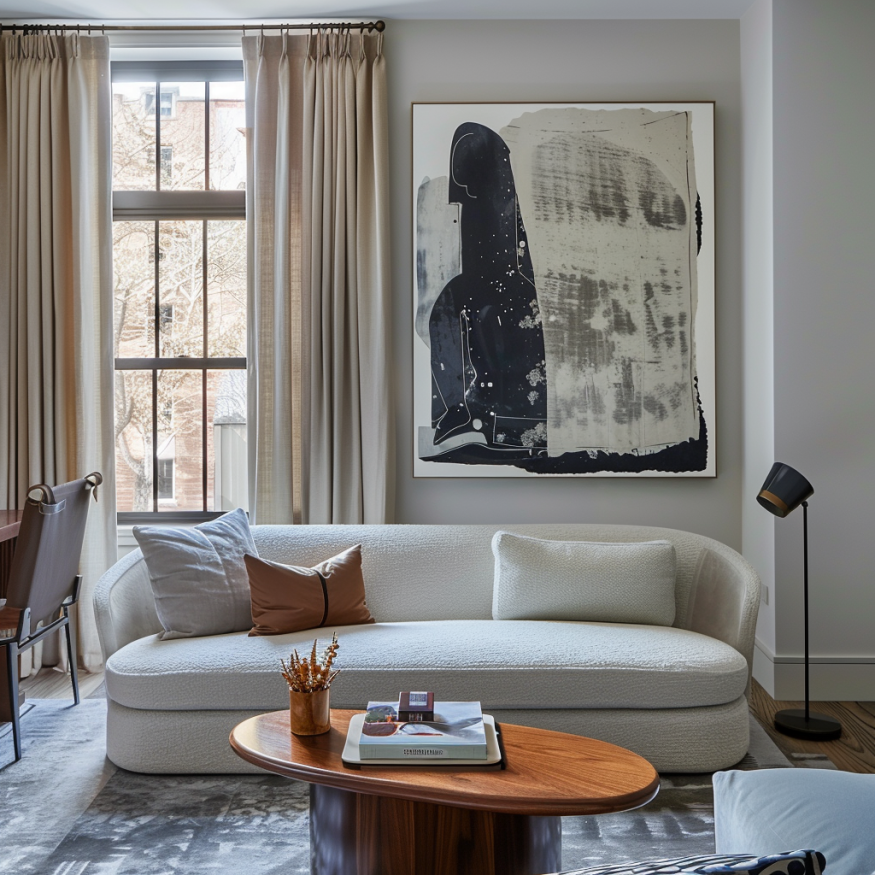
Small spaces are not a limitation — they are an opportunity. With fewer elements competing for attention, every design choice matters more, and art becomes one of the most powerful tools for shaping the character of a room.
The right artwork can visually expand a space, create balance, and bring a sense of openness. Through thoughtful composition, color, and scale, art influences how we perceive depth, light, and proportion — often making a room feel larger and more intentional than it actually is.
In small interiors, carefully chosen art does more than decorate. It adds breathing room, personality, and focus. The right piece can transform a compact space into one that feels considered, expressive, and complete.
Why Art Matters in Small Spaces
In small spaces, art naturally becomes a focal point. A well-chosen artwork draws the eye, creates visual structure, and gives the room a clear sense of purpose. Instead of feeling cluttered, the space feels intentional and balanced.
Art can also replace multiple decorative elements. One strong piece on the wall often does the work of several accessories, reducing visual noise while adding depth and character. This helps maintain a clean, open feeling — something especially important in compact interiors.
Empty walls, on the other hand, can make a space feel unfinished and smaller than it really is. Without a visual anchor, the room lacks direction. Thoughtful artwork fills that gap, bringing cohesion and making even the smallest space feel complete and thoughtfully designed.
Choosing the Right Size and Scale
When it comes to small spaces, choosing the right size of artwork is often more important than choosing the artwork itself. One strong, well-scaled piece usually works better than several small ones. A single statement artwork creates clarity and focus, while too many small pieces can make a space feel busy and fragmented.
Format also plays a key role. Vertical artworks help draw the eye upward, making ceilings feel higher and spaces more open. Horizontal pieces, on the other hand, visually widen a room and work especially well above sofas, beds, or narrow furniture. The right orientation can subtly reshape how a space is perceived.
One of the most common mistakes is choosing art that is too small for the wall. Undersized artwork tends to disappear, leaving the space feeling empty rather than refined. Another mistake is overcrowding — placing art too close together or without enough breathing room. In small interiors, scale and spacing should feel intentional, allowing the artwork to enhance the space without overwhelming it.
Color and Mood: What Works Best
Color has a powerful effect on how a small space feels. Light and neutral tones help reflect natural light, creating a sense of openness and calm. Soft beiges, warm whites, gentle greys, and muted earth tones allow a room to breathe while keeping it visually balanced.
Monochrome artworks and pieces with a limited color palette are especially effective in compact interiors. They create harmony without adding visual noise and make the space feel more cohesive. When colors relate naturally to each other, the room feels intentional rather than crowded.
Bold art can also work beautifully in small spaces — when used with care. A single bold piece can act as a statement and add personality without overwhelming the room. The key is contrast and balance: keep surrounding elements simple so the artwork stands out while the space remains open and comfortable.
Best Art Styles for Small Spaces
Choosing the right art style can make a small space feel calm, open, and thoughtfully designed. These styles work especially well in compact interiors:
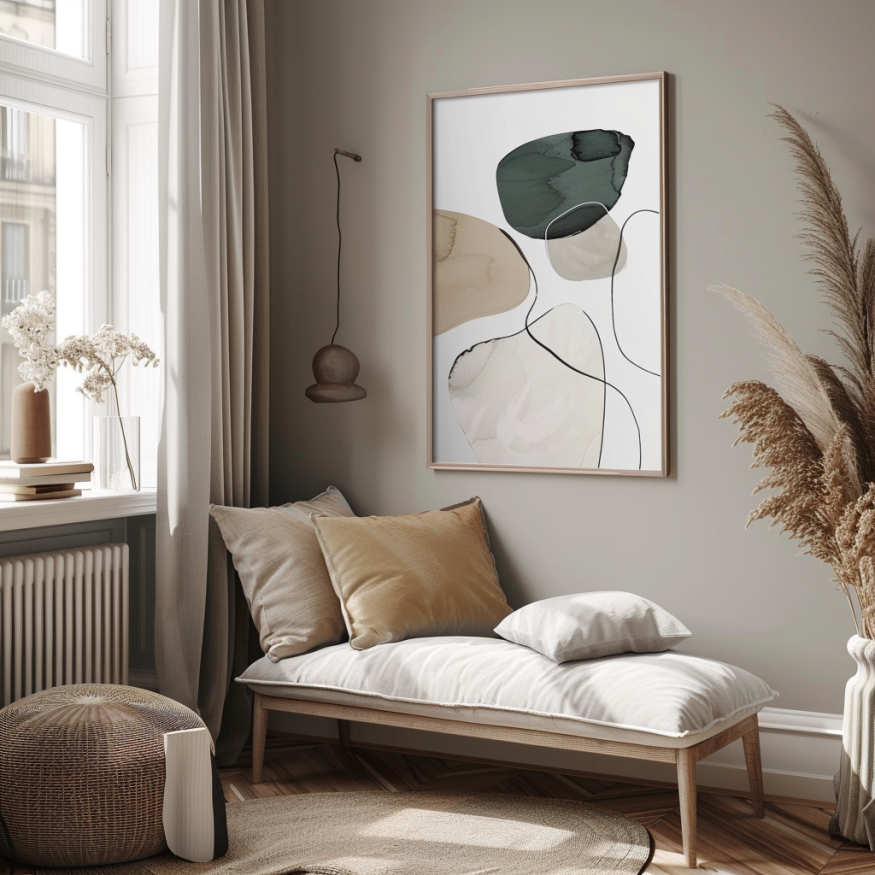
Clean Minimal
Clean minimal art focuses on simplicity, balance, and negative space. With restrained forms and limited color, it creates visual calm and helps a room feel lighter and more open. This style is ideal for maintaining a clean, uncluttered atmosphere in small spaces.
Organic Flow
Organic flow art introduces soft curves, natural movement, and gentle transitions. Its fluid forms add warmth and a sense of rhythm without sharp contrasts, making small spaces feel more relaxed, welcoming, and visually balanced.
Modern Abstract
Modern abstract art works well as a controlled accent. Through bold shapes and thoughtful composition, it adds character and personality without overwhelming the space. When paired with simple surroundings, modern abstract pieces become a focal point that enhances rather than dominates the room.
Placement Tips That Make a Big Difference
Proper placement can completely change how art interacts with a small space. Even the right artwork can lose its impact if it’s not positioned thoughtfully.
The eye-level rule is a simple guideline that works especially well in compact interiors. Hanging artwork so that its center sits at eye level creates balance and allows the piece to feel naturally integrated into the room, rather than floating too high or feeling disconnected.
Art placed above furniture should relate in scale and alignment. Ideally, the artwork should be centered and slightly narrower than the furniture below it. This creates visual cohesion and prevents the space from feeling top-heavy or cluttered.
When deciding between a gallery wall and a single piece, simplicity is often the better choice for small spaces. A single, well-chosen artwork creates clarity and focus, while gallery walls work best only when they are tightly curated and well spaced.
Don’t overlook empty corners and narrow walls. These areas are perfect for vertical pieces or slim compositions that add interest without taking up physical space. Used thoughtfully, even the smallest wall can become a refined design element.
Framed Prints vs Canvas in Small Interiors
Both framed prints and canvas artworks can work beautifully in small spaces — the key is choosing the right format for the room.
Framed prints are often the better choice when you want a clean, refined look. Slim frames and light borders help keep the artwork visually light, making them ideal for compact interiors. Framed pieces also work well in spaces where structure and precision are important, such as hallways, bedrooms, or minimalist living areas.
Canvas artworks offer a softer, more integrated feel. Because they don’t rely on frames, canvases blend naturally into the wall and can feel less formal. This makes them a good option when you want the artwork to feel more organic or expressive without adding visual clutter.
Depth and shadow play an important role in how art affects space. Frames create subtle shadows that add dimension and separation from the wall, while canvases sit closer and feel more continuous. In small interiors, lighter depth and softer shadows help maintain openness and prevent the space from feeling crowded.
Small Space, Big Personality
In small spaces, art plays a key role in expressing character and individuality. With fewer elements in the room, each choice becomes more meaningful, allowing artwork to reflect personal taste, mood, and identity.
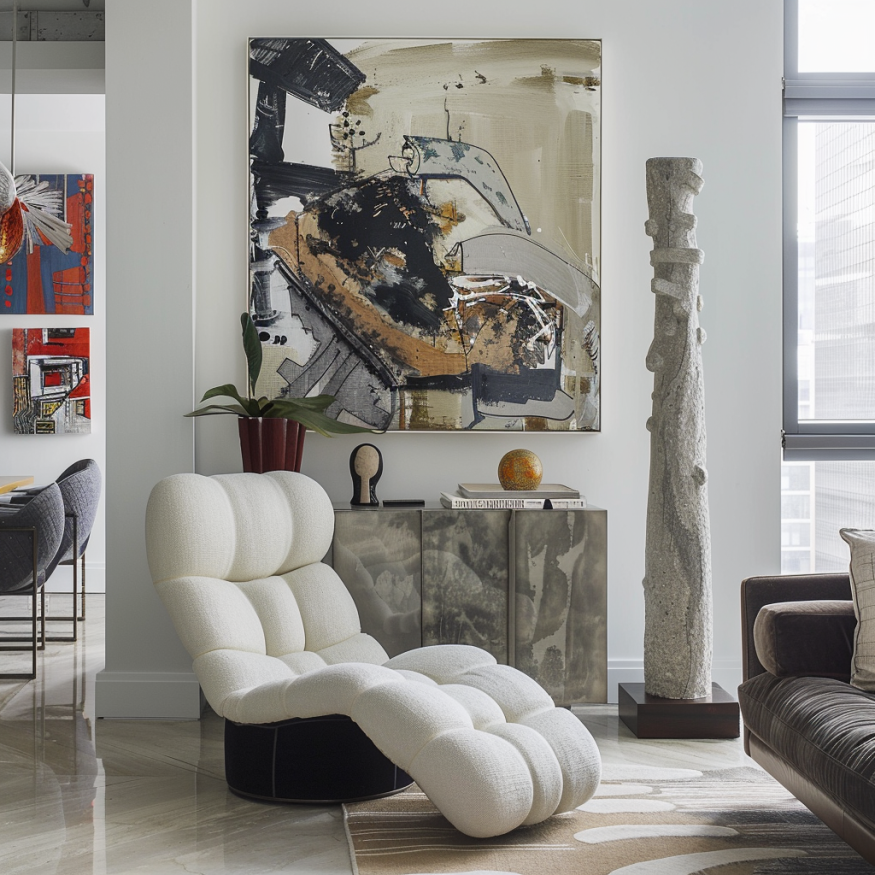
When the number of objects is limited, every piece needs to serve a purpose. One thoughtfully chosen artwork can carry more meaning than multiple decorative items, creating a space that feels intentional rather than crowded. This approach allows personality to come through clearly, without visual noise.
In compact interiors, art often becomes the main design element. It sets the tone of the room, guides the color palette, and anchors the overall atmosphere. When treated as the focal point, artwork transforms a small space into one that feels expressive, balanced, and uniquely personal.
Curated Art for Small Spaces at Silta
At Silta, we approach art with interiors in mind. Each piece is carefully selected for its balance, scale, and ability to work naturally within real living spaces — especially smaller ones where every detail matters.
Our curated collections simplify the process of choosing art. Instead of sorting through endless options, you’re guided toward artworks that already work harmoniously in terms of size, color, and mood. This makes it easier to find pieces that feel intentional and effortless in your space.
Whether you’re looking for visual calm, gentle movement, or a subtle statement, our collections are designed to help you find art that fits your space and your lifestyle.
Explore art for small spaces
Conclusion
A small space can be just as thoughtful and stylish as a larger one. With the right approach, limited square footage becomes an opportunity to focus on what truly matters — balance, intention, and character.
Art is one of the simplest and most effective ways to transform a compact interior. A carefully chosen piece can open up a room, define its mood, and bring a sense of clarity and cohesion without adding clutter.
When selected with care, art turns small spaces into places that feel personal, expressive, and complete — proving that thoughtful design is not about size, but about intention.
What type of art works best in small spaces?
Art with clean composition, balanced proportions, and a limited color palette works best in small spaces. Styles like Clean Minimal, Organic Flow, and Modern Abstract help maintain visual openness while adding character.
Is one large artwork better than several small ones?
In most cases, yes. One well-scaled artwork creates a clear focal point and makes a small space feel more intentional. Multiple small pieces can work, but only when they are carefully curated and spaced.
Can bold art be used in small rooms?
Absolutely. Bold art can work beautifully in small spaces when used as a single statement piece. Keeping the surrounding decor simple allows the artwork to stand out without overwhelming the room.
Should artwork be framed or unframed in small interiors?
Both options can work. Framed prints offer structure and a refined look, while canvas pieces feel softer and more integrated. The choice depends on the mood you want to create and how much visual depth the space can handle.
How high should art be hung in a small space?
Artwork should generally be hung at eye level, with the center of the piece aligned to where your eyes naturally rest. This creates balance and helps the art feel connected to the space.